

AWARD RESULTS
Choice of Kanazawa

Best Feature Film (Grand Prize)

"CRIMSON SNOUT" (2023 Vietnam) Director: Luan Thanh Luu
Best Short Film (Grand Prize)
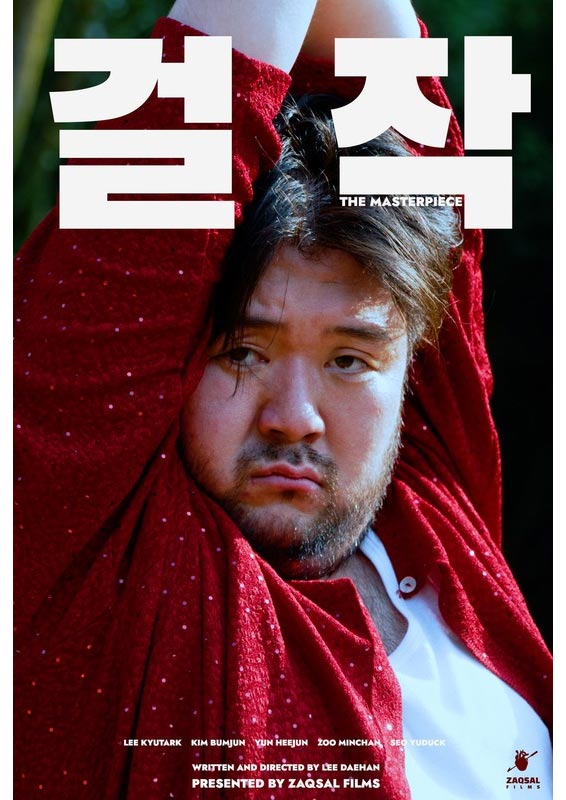
"THE MASTERPIECE" (2022 Korea) Director: Lee Dae-han

Best Horror Feature
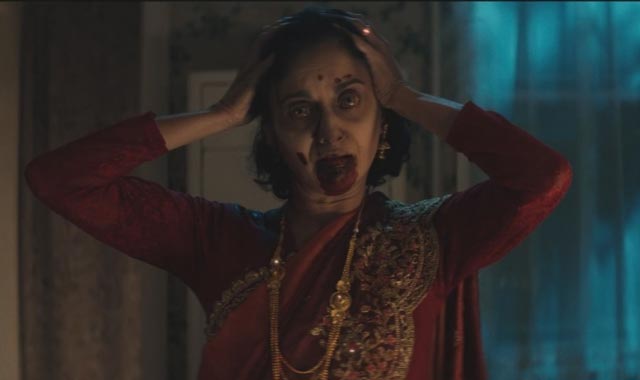
"ALL YOU NEED IS BLOOD" (2023 USA) Director: Cooper Roberts
Best Entertainment Feature
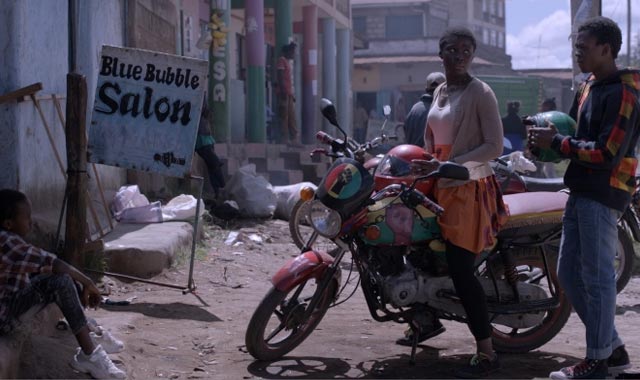
"KIPKEMBOI" (2024 Kenya/Canada) Director: Charles Uwagbai
Best Fantasy Feature
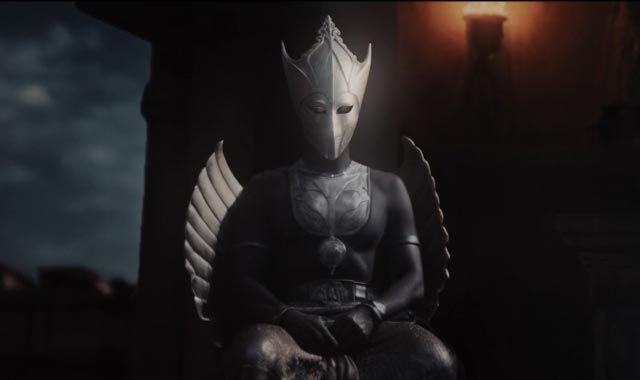
"Dream Machine: Ahriman, Part II" (2024 Netherlands/Japan) Director: Mani Nikpour
Best Drama Feature

"Heavier is the Sky" (2023 Brazil) Director: Petrus Cariry
Best Documentary Film

"The Passion of Mahmoud" (2023 Iran) Director: Davoud Abdolmaleki
Best Music Film
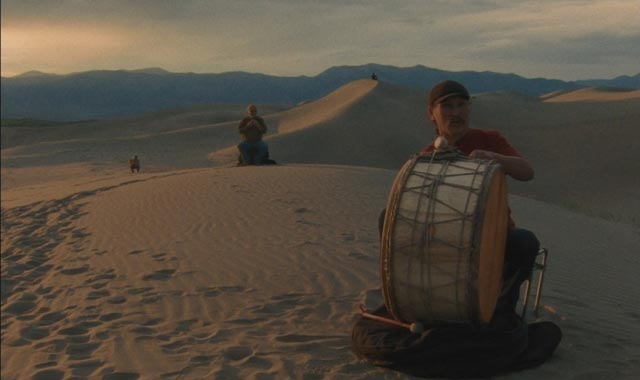
"HUNNUN SOONDAN" (2023 Russia) Director: Misha Voropaev
Best Short Horror

"Batshit Crazy" (2023 India) Director: Yogesh Chandekar
Best Short Comedy

"JHUMRI TALAYIAN" (2023 India) Director: Utkarsh Thukral
Best VFX Film
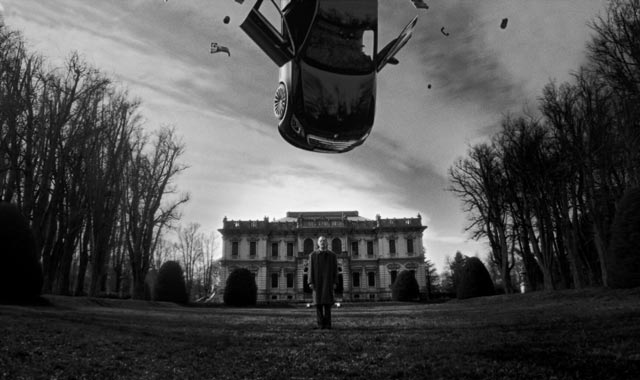
"The Complex Forms" (2023 Italy) Director: Fabio D'Orta
Best Cinematography & Lighting
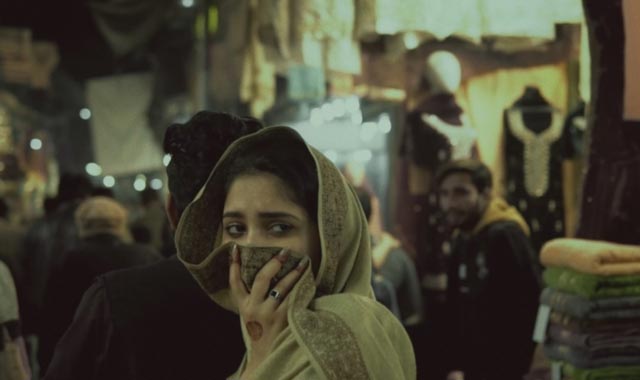
"JAGG: Pieces Of Life" (2022 Pakistan) Director: Mehroz Amin
Best Leading Actor
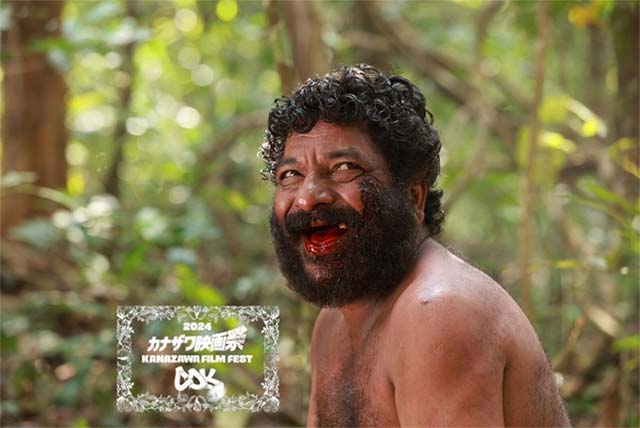
Jaffa Idukki
from "POYYAMOZHI" (2024 India)
Director: Sudhi Anna
Best Leading Actress
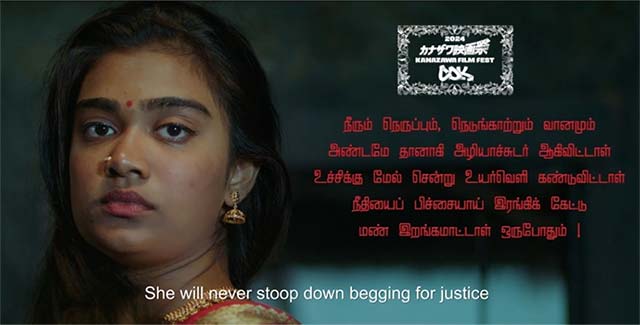
Devananda Shajilal
from "SAAYAVANAM" (2023,India)
Directed: by Anil Kumar
Rising New Film Director
Grand Prize
No applicable title
Audience Award
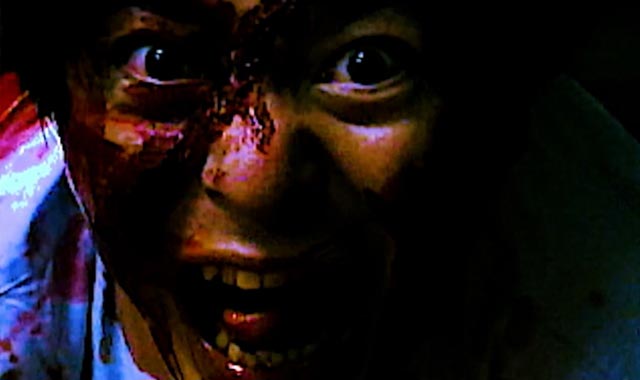
"Killmageddon" (2023 Japan) Directors: Nozomi Tomaki and Kyosuke Koizumi
Incentive Award
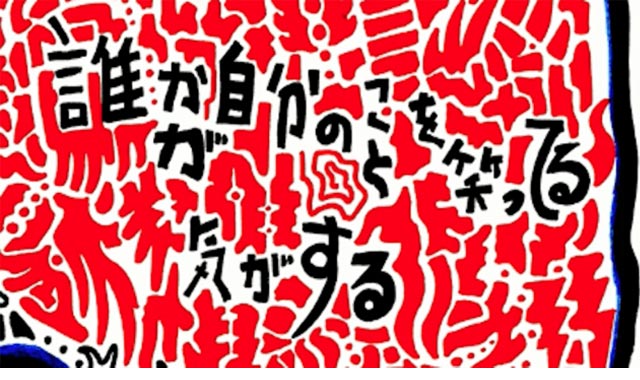
Kanazawa Film Festival 2024 General Review
Born in 1950. As editor-in-chief of the legendary occult magazine "Revival Chikyu Roman" (1976-1977), he attempted to renew esoteric traditions, participated as an advisor in the launch of Gakken's "Mu", founded Hachiman Shoten (1981) with the aim of unearthing books on Shinto spiritualism, and in 1983 his book "Deguchi Onisaburo's Warning from the Spirit World" (Kobunsha) became a bestseller, exerting a decisive influence on the occult boom of the 1980s. He also devoted himself to the research and development of hallucinogenic devices. His book of occult dialogue with Inoo Heitaro, "Stand on the spiritual front line!" is scheduled to be published soon.
"At this year's 'Choice of Kanazawa,' a total of 41 carefully selected films were screened. These included 10 films from Iran, 7 from India, 3 each from Argentina and the U.S., 2 each from Brazil and Italy, and 1 from Vietnam, Sri Lanka, Pakistan, Taiwan, South Korea, Portugal, Ukraine, Estonia, the Netherlands, Morocco, and Kenya.
These films, each to varying degrees, vividly depicted the ethos, values, customs, and societal issues of their respective countries and regions, giving us a precious opportunity to experience the spiritual and cultural landscapes of those places.
Films are not just a reflection of culture; they are a mirror of the entire societal structure, the unique values, rhythms of life, and challenges of a country or region. Particularly with indie and self-produced films, where commercial constraints are minimal, the directors’ personal perspectives and the spiritual climate of their countries tend to be strongly expressed.
These films offered a refreshing opportunity to engage with the real 'diversity' of places like Iran, India, and South America—not the sanitized version of diversity often discussed elsewhere.
The Kanazawa Film Festival is now evolving into an international independent film festival. I believe this year's event marked the first step toward becoming a festival befitting the cultural city of Kanazawa in the Hokuriku region.
As for the evaluation criteria for the award-winning films, I believe other judges have touched upon those points, so here, I would like to share some of my personal thoughts on the matter.
The Grand Prize winner, "CRIMSON SNOUTS"—its completeness as a horror film is beyond question, but what intrigued me was how the film reflects the unique sociopolitical circumstances of its country, which differs from China, where horror films are banned. In September 2018, the People's Committee of Hanoi issued a statement urging people to 'stop eating dog meat,' suggesting that the practice has become somewhat of a social issue, affecting the nation’s image.
While this film is an independent production and not a government propaganda piece, its high-quality horror elements have had such a powerful impact that it likely led to more people stopping the consumption of dog meat. If so, that demonstrates the incredible power of cinema.
By the way, although criticism against dog meat consumption in China is growing, it seems that screening this film might have a more effective impact than tired arguments about animal rights.
What surprised me even more was the persistence of a strong patriarchal system in Vietnam and the oppression of women. This seems to be a much more pressing issue for a socialist state to address than the dog-eating culture. Frankly, it makes me wonder what Ho Chi Minh and the Viet Cong were doing all this time...
The Iranian films were also fascinating in their context. For instance, "...Until" is clearly shot guerrilla-style and couldn’t possibly be screened in Iran, but it doesn’t seem like cultural censorship there is as strict as one might expect. For example, "Women According to Men" received support from the Iranian National Film Archive and spliced together clips of women in Iranian cinema from 1925 to just before the Iranian Revolution, seemingly offering a subtle nod of approval to the White Revolution of the Pahlavi era from the perspective of women's liberation.
"The Situation of Mahdi" also had little propagandistic tone, with candid depictions of the protagonist's fury over the execution of his brother by the Mojahedin-e Khalq (a group that played a significant role in the revolution but later clashed with Khomeini’s faction) and the political scheming against him.
The winner of the Best Fantasy Film Award, "Dream Machine: AHRIMAN 2", is a sequel to last year’s Ahriman. It is a well-crafted work with excellent CGI, but many Japanese viewers likely lack knowledge of Zoroastrianism, the religious framework within which the movie is set. With some supplemental information on that, and perhaps by editing the previous and current installments into a roughly two-hour film, it could potentially be released in Japan.
There are scenes set in Japan and some filmed on location here, but if I may suggest, incorporating connections to massive ancient stone structures like Asuka’s Sakefune Ishi, which Seicho Matsumoto theorized was linked to Zoroastrianism, or the Ishi no Hoden in Takasago, Hyogo, could make the work even more engaging.
Incidentally, director Mani Nickpour is an Iranian exile residing in the Netherlands, and in the film, Mohammad Reza Pahlavi is depicted as a hero.
The Pahlavi dynasty, which overthrew the Islamic Qajar dynasty in 1925, made significant efforts to revive Iran’s pre-Islamic culture, even officially changing the country's name from Persia to Iran in 1935, based on the Zoroastrian scriptures, Avesta. With this context in mind, one can appreciate this film on a deeper level.
Although it didn’t make the final selection, I was personally captivated by the monochromatic visuals of "SATANA"."
Born in Osaka in 1964, after graduating from university, he joined Kinema Junpo and Seiyu's film division, where he worked on discovering new filmmakers by organizing projects such as the Tokyo International Film Festival's Nippon Cinema Now section and the Sundance Film Festival in Tokyo. Meanwhile, he also began his own creative activities. In 1999, he made his debut as a screenwriter with "Kimpatsu no Sogen" ("The Blond Prairie"). Since then, he has worked on screenplays for films such as "Oh! Mikey," "Gozu", and "Ichi the Killer"(both titles directed by Takashi Miike). In 2005, he made his directorial debut with "Tokyo Zombie." Following this, he has worked as a writer and director on projects such as "Nihon no Uta: Haru no Ogawa", the "Edogawa Rampo Short Story Collection" series, and the "Seishi Yokomizo Short Story Collection" series. As an actor, he has appeared in films such as "Kill Bill"(directed by Quentin Tarantino) and "Wife of a Spy"(directed by Kiyoshi Kurosawa).
"I served as a judge again this year. In the 'Choice of Kanazawa' (International Section), we reviewed 41 films selected from 335 submissions, and for the 'Rising New Film Director' (Domestic section) award, we evaluated 4 works chosen from 132 entries, for a total of 45 films. I provided individual critiques during the awards ceremony, so please check the official website, which will be updated soon with the award results. I believe that the introduction of the 'Choice of Kanazawa' category last year has effectively transformed the Kanazawa Film Festival into an international event. It’s rare for a film festival to have judges watch 45 films, but the experience of encountering such diverse global cinema was invaluable. Once again, I was reminded that there are cultures we Japanese cannot fully understand, although there are also commonalities.
One of the personal highlights of this year's film festival is "The Masterpiece", a short film by Korean director Lee Dae-han, which won the Grand Prix for short films. The story follows a successful music video director who is hired by a mysterious artist with a large budget to shoot a music video. When the director arrives at the specified location, a greenhouse in a desolate field, he is greeted by a strange, towering man. Believing him to be the artist, the director tries to make sense of the man’s cryptic stories and even endures watching a nonsensical dance. However, the director’s patience finally reaches its limit.
The film is an incredible showcase of tension and dialogue, particularly in the unsettling atmosphere between the two characters. Not only is the psychopathic man’s character compelling, but the music video director himself is also portrayed brilliantly. The unpredictable progression of the story makes it a truly fascinating watch. Director Lee Dae-han, who usually directs music videos, revealed that the character of the self-proclaimed artist was inspired by his own experiences with eccentric clients in the industry. While the plot may seem absurd, the clash between these characters hints at the broader potential of cinema, making it a masterpiece in its own right.
This year’s festival also saw the arrival of many international guests, and though time was short, I had the chance to interact with several of them. It made me realize how crucial it is to improve my own English skills."
Born in Kanazawa, Ishikawa Prefecture in 1980. Program Coordinator at the 21st Century Museum of Contemporary Art, Kanazawa. As a member of the film club of the NPO Kanazawa Art Gumi, he organized screenings of "The Tohoku Documentary Trilogy" directed by Ko Sakai and Ryusuke Hamaguchi, and "OUT OF PLACE =Memories of Edward Said" directed by Makoto Sato.
"After watching all the films screened at the Kanazawa Film Festival 2024, I was reminded of the significance of learning about the world through film. Rather than the state of the world being conveyed only through news reports and sensational images, films vividly depict the thoughts and emotions of people living in those places as part of their daily lives. While it is necessary to view them from a distance as fiction, the fact that these are human beings living as individuals stirs emotions and gives us the opportunity to begin thinking about people around the world as one people, transcending borders and ethnicities.
I would like to offer my heartfelt congratulations to the high-quality works that won awards in each category, including "CRIMSON SNOUTS", which won the Grand Prix for Feature Film, and "THE MASTERPIECE" which won the Grand Prix for Short Film. Visual The giant creature that appear in "THE COMPLEX FORMS" which won the Best VFX Award, were so horrifying that they evoked the instinctual and existential fear of humans being preyed upon, and were truly amazing. I would like to leave my comments on each work to the comments made by each judge at the award ceremony, but in addition to the award-winning works, short works such as "THE MIST" which depicts the reality of the war in Ukraine, and "...UNTIL" which shows women without hijabs going out into the streets of Tehran and bravely dancing like a flash mob, filmed on an iPhone, were very impressive in terms of learning about the world through film. Also, personally, I highly praise the intelligent and elegant experimental attempt of "A Song for Juliet."
Finally, I would like to express my heartfelt respect for the Kanazawa Film Festival's bold decision to select 41 foreign films out of the 45 films in total, and as a film fan, I would like to express my gratitude to the organizers, film industry personnel, translators, and staff for their excellent work. I hope that even more visitors will attend next year, and that the Kanazawa Film Festival will develop even further as an international film festival."